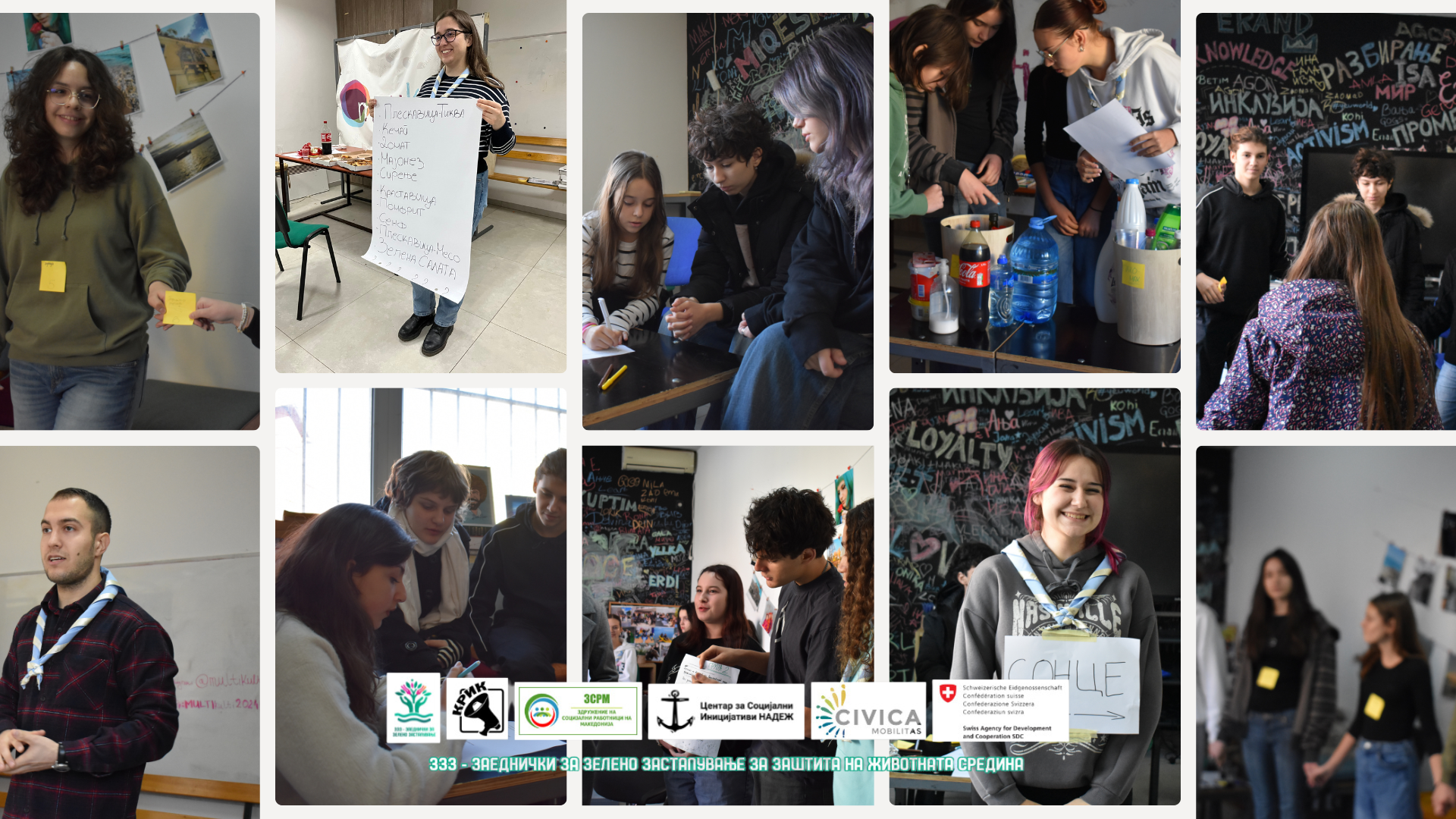
The activities took place at the “Multi Kulti” Youth Center and brought together 34 students aged 11 to 18 from primary and secondary schools.
What made this initiative particularly meaningful was the active role of high school students, who acted as young leaders and guided the group work process, encouraging discussion, critical thinking, and collaboration.
🌍 First Workshop: Local Environmental Issues and Carbon Footprint
The first educational workshop focused on identifying local environmental challenges and understanding the concept of the carbon footprint.
Through interactive work in small groups, participants discussed:
the impact of everyday habits on the environment,
responsible waste management,
opportunities to reduce their personal carbon footprint.
Special attention was given to recycling plastic bottles and the role of Pakomak vending machines in reducing waste. Participants learned about the types of plastic that can be recycled and discussed the importance of proper waste separation and disposal.
The workshop concluded with the activity “Web of Life,” which practically demonstrated the interconnectedness of all elements within an ecosystem and how pollution or disruption in one segment can affect the entire natural balance.
👕 Second Workshop: Textile Waste and Sustainable Choices
The second workshop focused on textile waste – a topic that is becoming increasingly important in modern society.
Through real-life scenarios (old sneakers, buying new clothes), young participants worked in groups to propose environmentally friendly solutions such as reuse, donation, or recycling.
The interactive activity “agree/disagree” created space for critical debate about habits that affect nature, while the “carbon sandwich” activity allowed participants to practically measure the carbon footprint of a product. The workshop concluded with a joint discussion on concrete steps young people can take to reduce textile waste.
🎯 What Did We Achieve?
The initiative resulted in:
Strengthened capacities of 4 young leaders to implement green and educational activities.
Increased environmental awareness among 34 young people regarding recycling, waste separation, and sustainable management of plastic and textile waste.
Identification of local environmental issues and practical solutions proposed directly by the participants.
💡 Lessons Learned
The process showed that young people already possess solid knowledge about environmental topics and sustainable solutions, and they are capable of critically recognizing issues within their community. However, more space for encouragement, practical engagement, and opportunities for initiative is needed so they can actively propose and implement solutions.
“Green Rangers” was not just a series of workshops – it was a step toward building a generation that thinks responsibly, acts locally, and contributes to a greener future for Kumanovo. 🌿
📌 Disclaimer
The activity is part of the project “ZZZ – Together for Green Advocacy for Environmental Protection,” funded by the Embassy of Switzerland in North Macedonia through the Civica Mobilitas program, and implemented by the Center for Youth Activism KRIK, the Center for Social Initiatives “Nadez,” and the Association of Social Workers of Macedonia – ZSRM.