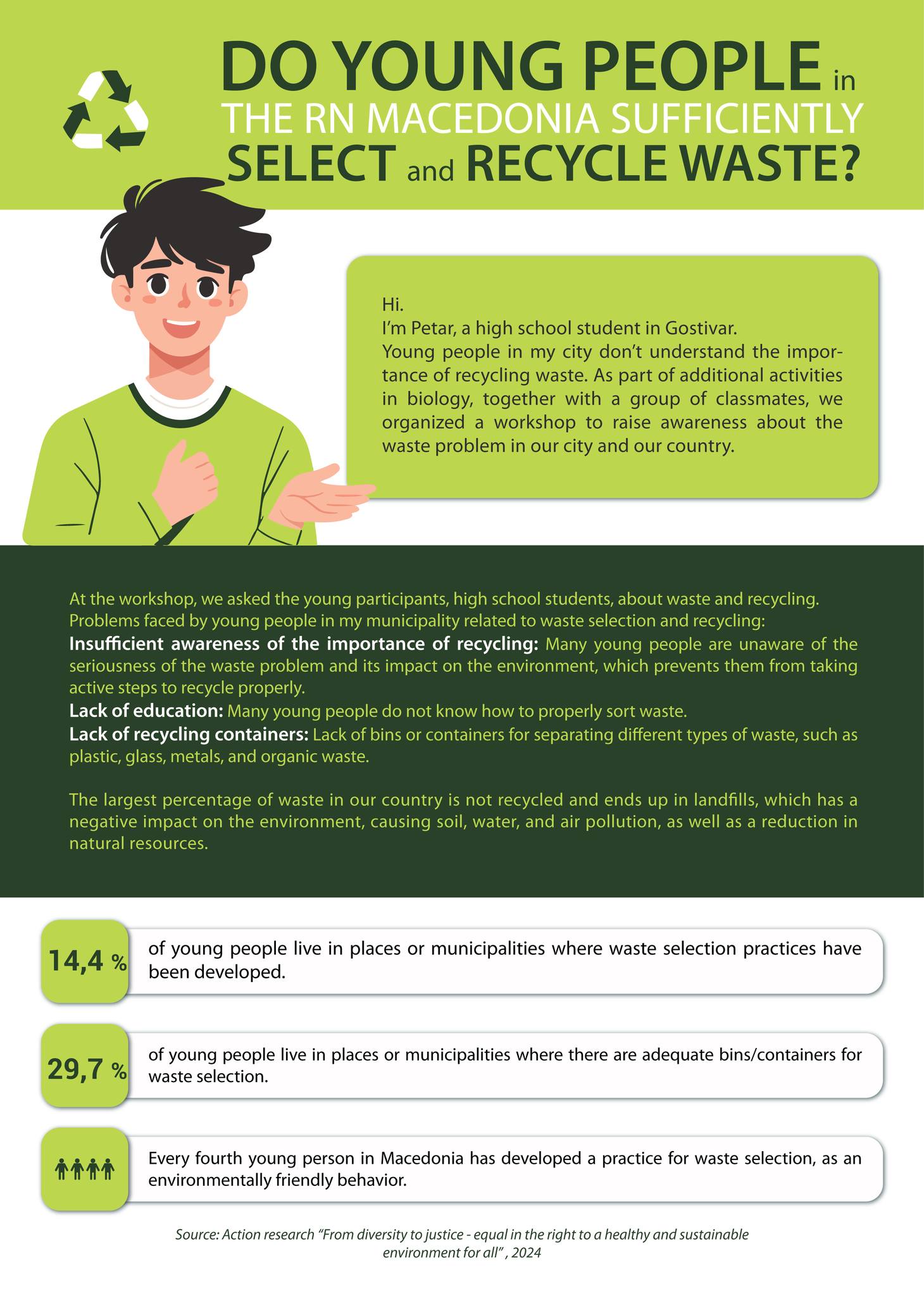
Waste separation and recycling remain a significant challenge in many local communities across North Macedonia. This case study presents the experience of a high school student from Gostivar who, together with his classmates, used school-based activities to raise awareness among young people about the importance of proper waste management.
Through an organized workshop, young participants discussed how they perceive the problem of waste and why recycling has not yet become part of their everyday habits. The study identifies several key obstacles: limited awareness of the seriousness of pollution, a lack of practical knowledge on how to properly separate waste, and insufficient infrastructure—particularly the absence of appropriate containers for different types of waste.
A large proportion of waste in the country ends up in landfills, leading to long-term negative consequences for soil, water, air, and natural resources. This directly affects quality of life and threatens the environmental future of younger generations.
In addition to identifying challenges, the case study offers clear directions for action. It emphasizes the importance of peer education, organizing local waste collection and separation initiatives, using social media as a tool for information and engagement, and cooperating with municipalities to improve recycling conditions.
The key message is that change starts with the individual. By setting a personal example—at home, at school, and within the community—young people can become drivers of positive environmental change and contribute to a cleaner and more sustainable environment.
📘 Read the full case study here.
ℹ️ The case study was developed within the project “ZZZ – Together for Green Advocacy for Environmental Protection”, funded by the Government of Switzerland through the Civica Mobilitas program, and implemented by Center for Youth Activism KRIK, Center for Social Initiatives “Nadez”, and the Association of Social Workers of North Macedonia – ZSRM.
The views expressed in this publication are the sole responsibility of the authors and do not necessarily reflect the views of the Government of Switzerland, Civica Mobilitas, or the organizations implementing the program.