The goal of the campaign was to present and explain key terms emerging from our research and the strategic directions of the project. These terms form the foundation for understanding the concept of green social and youth work and serve as important tools for integrating the ecological perspective into professional practice.
The campaign included the following terms:
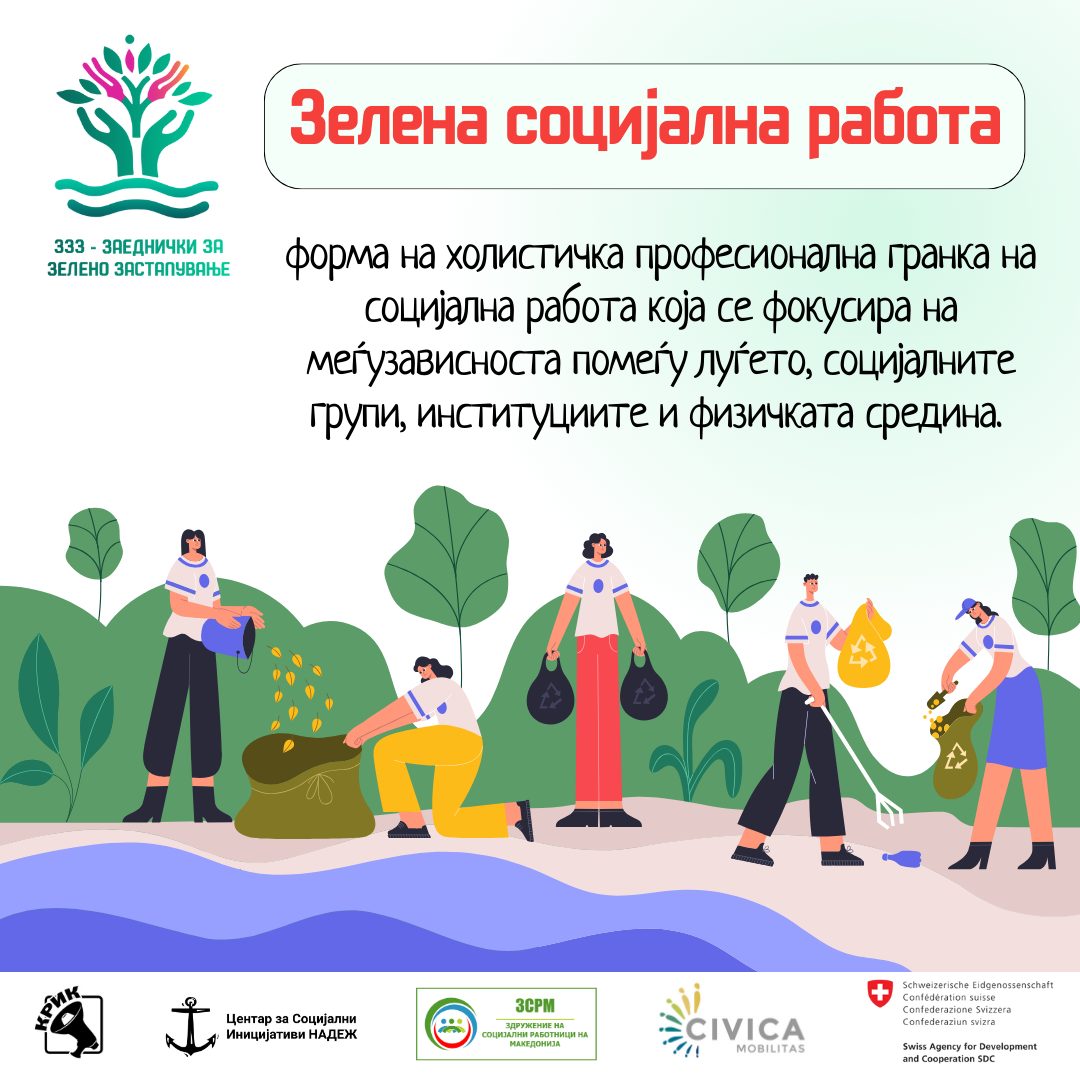
Green social work – integrating the ecological component into social work as a necessary element for societal sustainability;
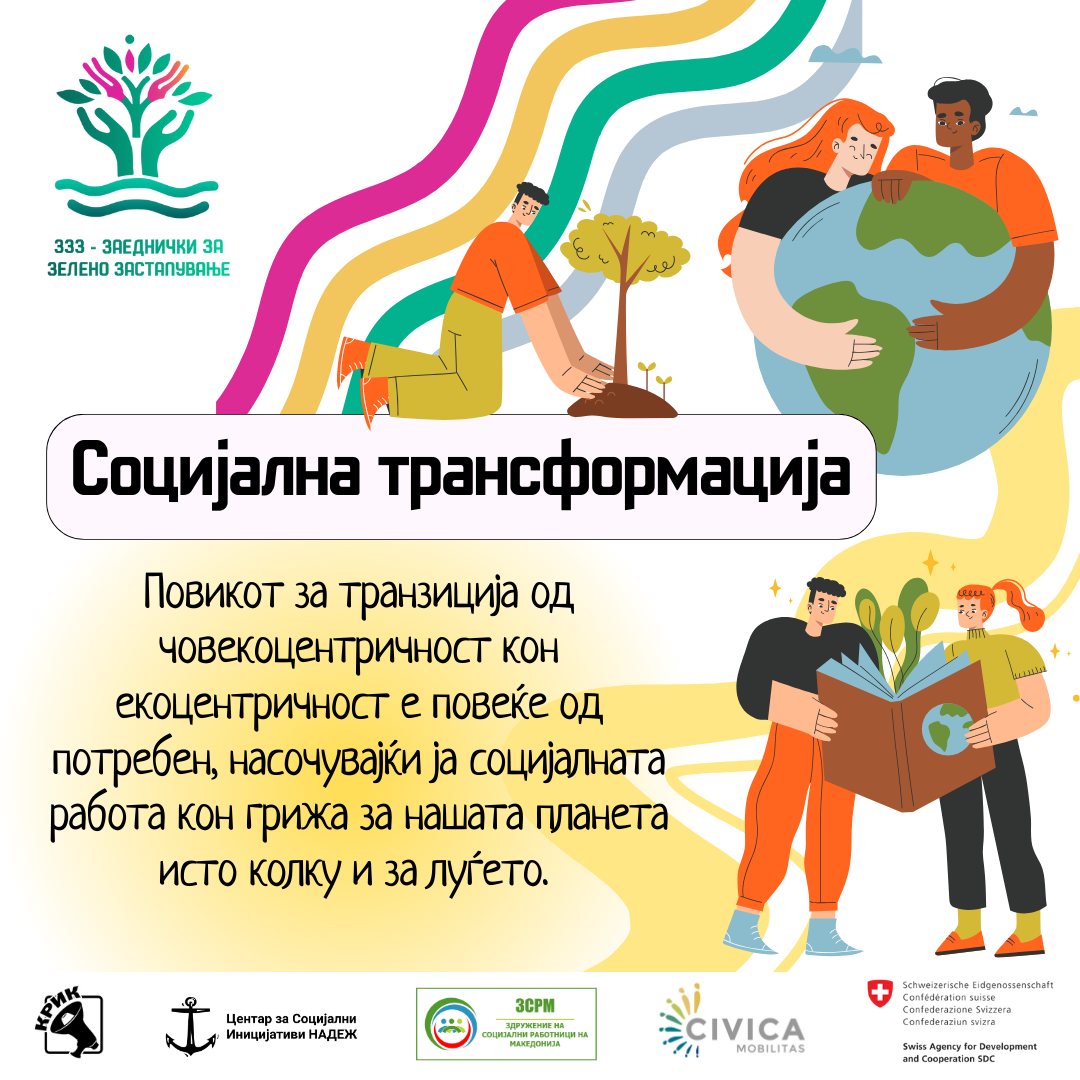
Social transformation – a process of deep change toward a fairer and more inclusive society;
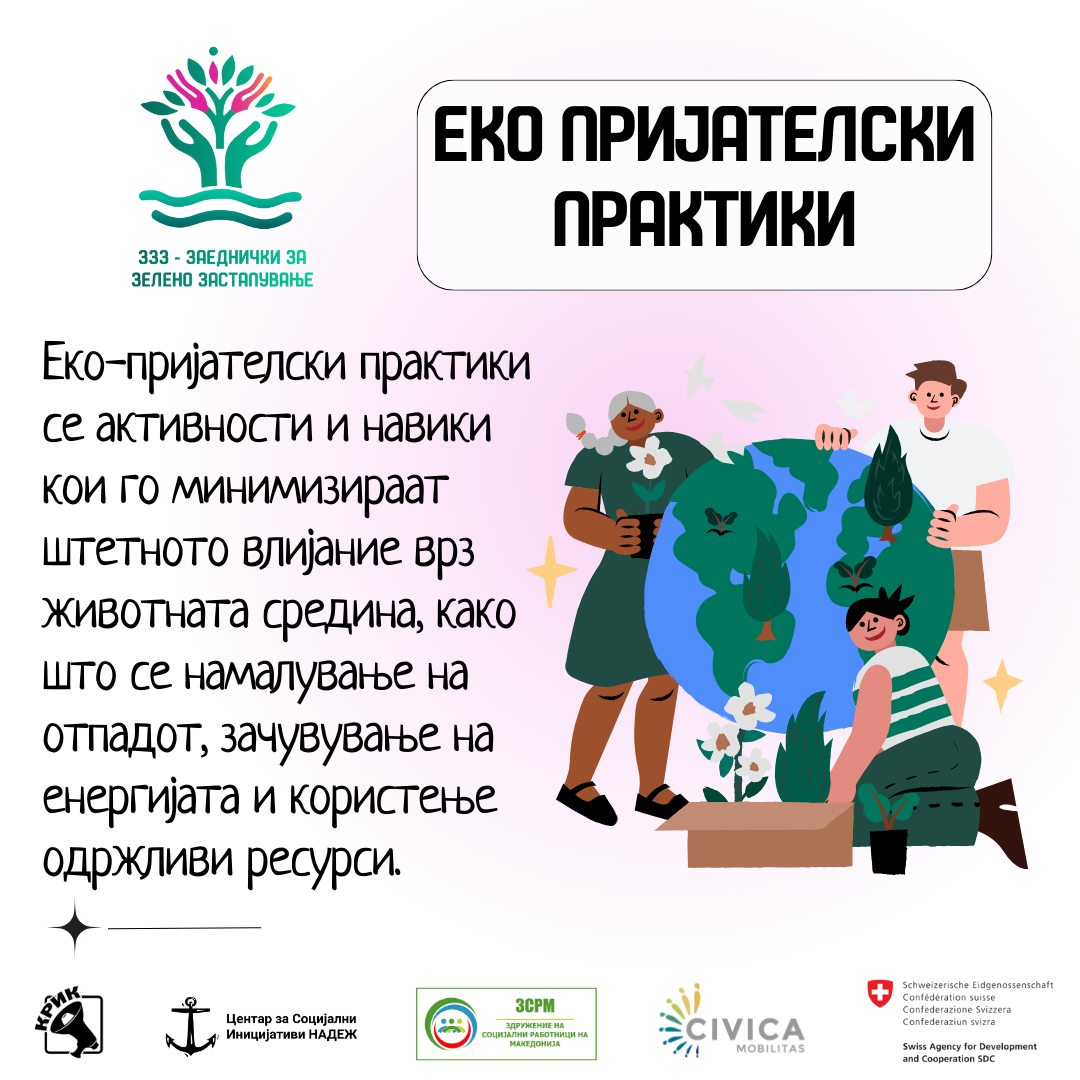
Eco-friendly practices – everyday professional and personal decisions that reduce harm to the environment;
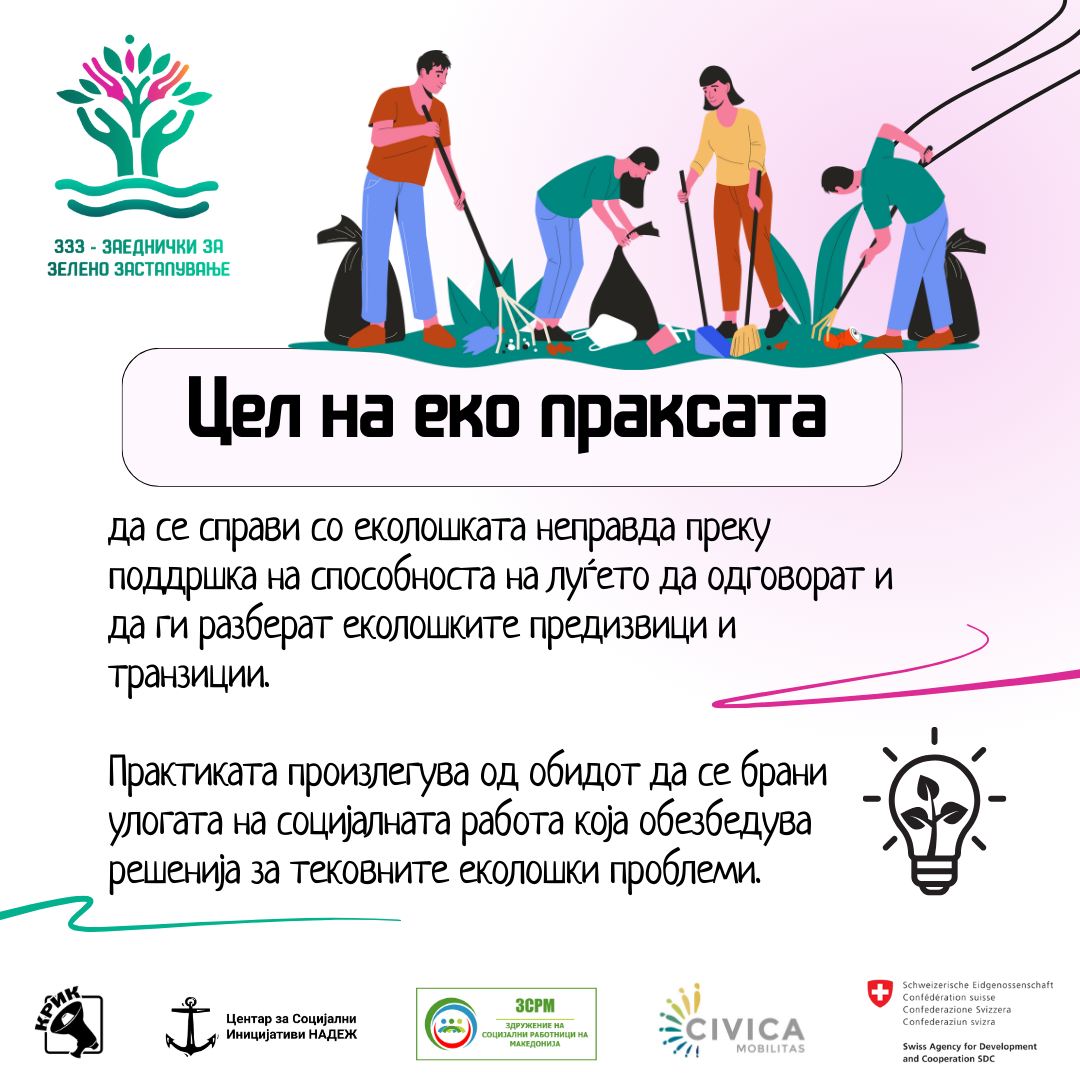
Goal of eco practice – achieving harmony between people and nature through professional intervention;
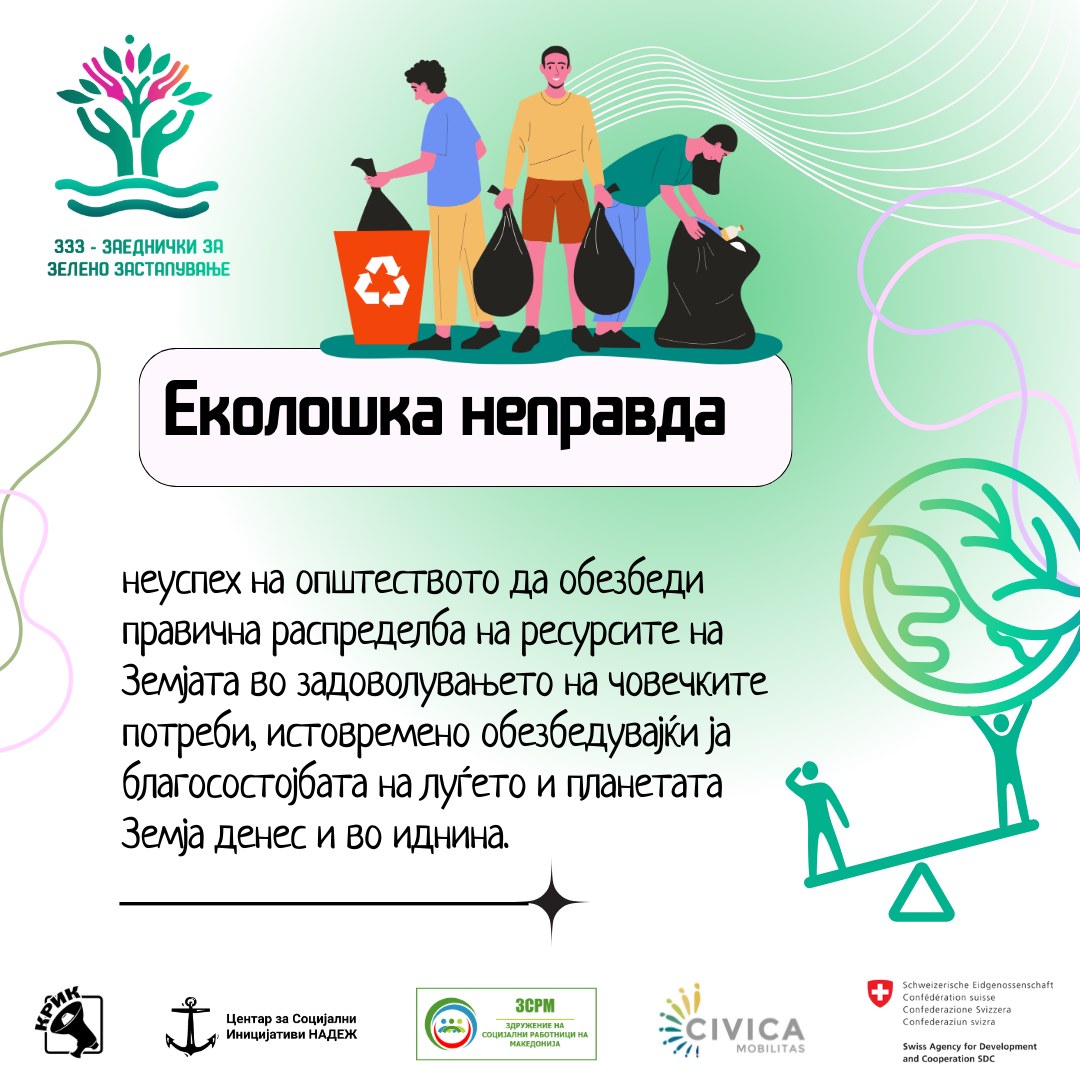
Environmental injustice – the unequal distribution of environmental risks and consequences, particularly affecting vulnerable groups;
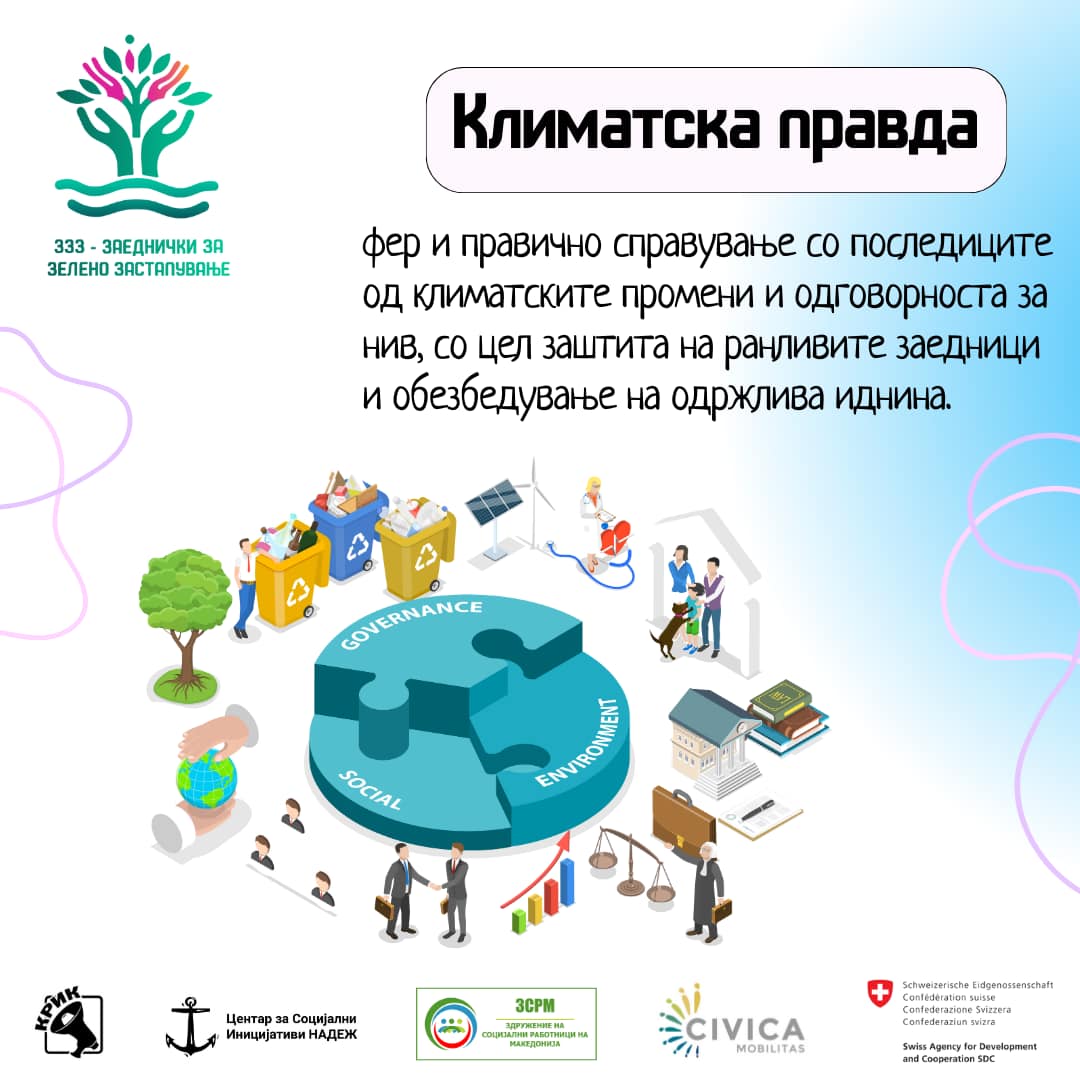
Climate justice – a concept that links climate action with human rights and social equity;
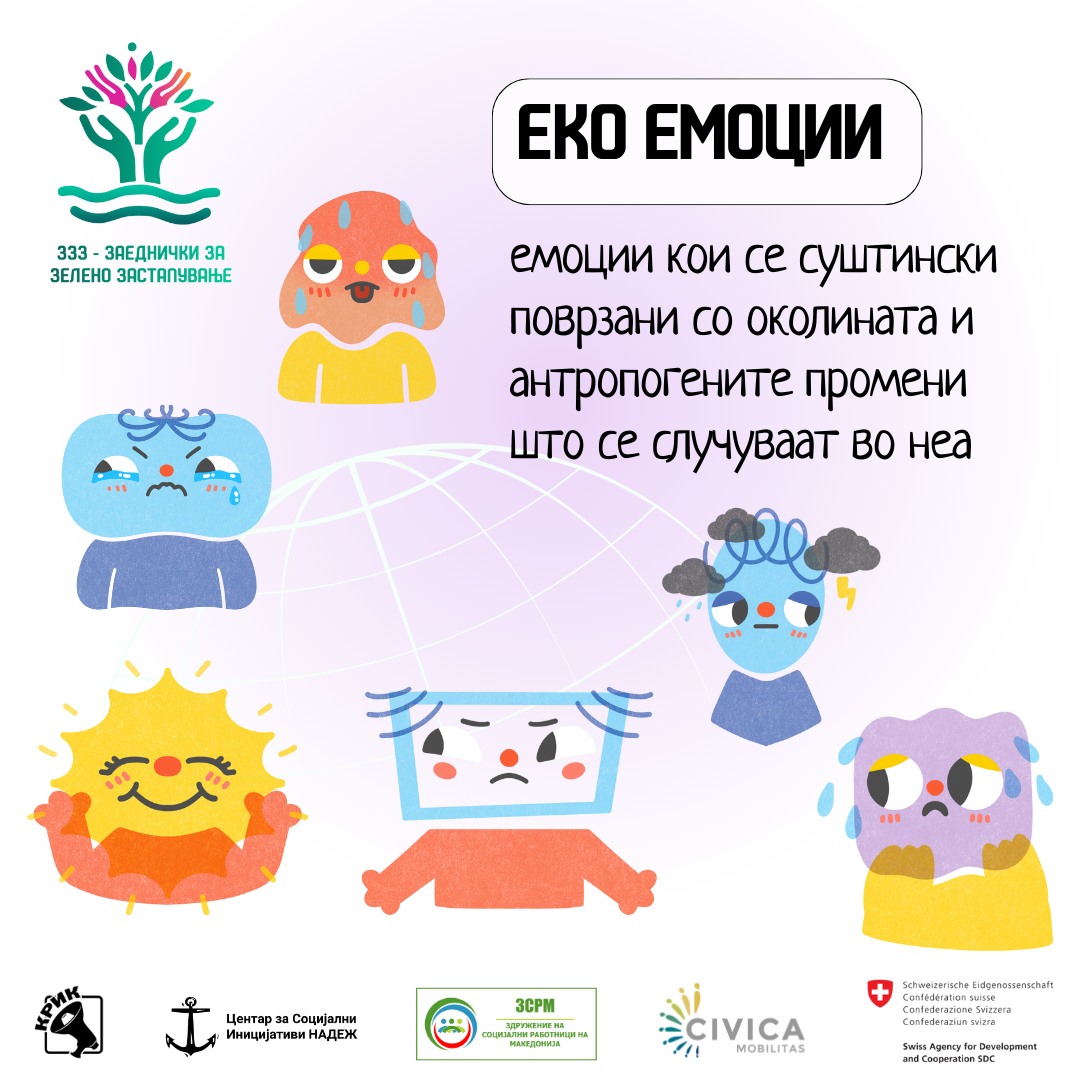
Eco emotions – a range of emotions triggered by awareness of environmental threats and changes;
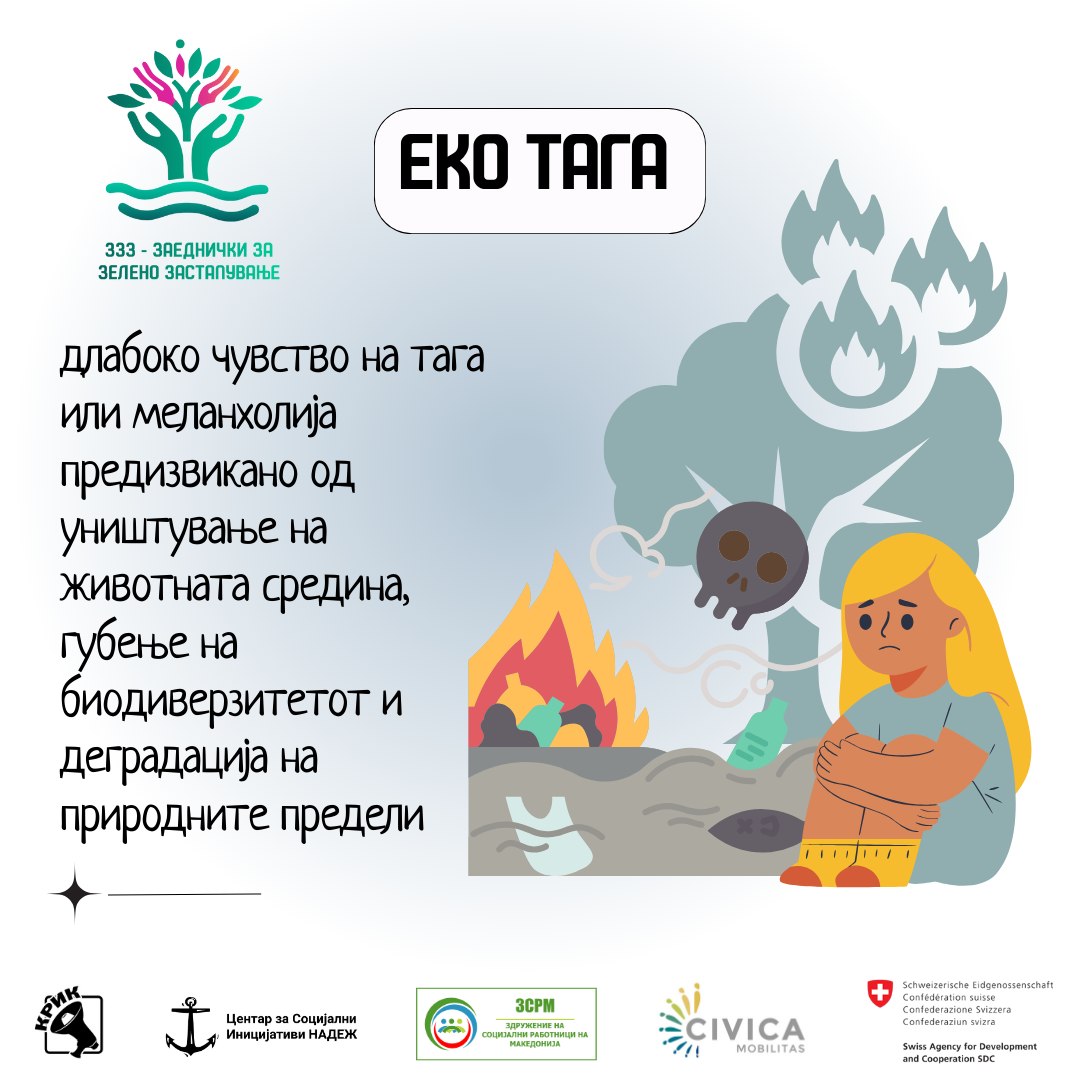
Eco grief – a sense of sorrow due to the destruction of nature and the loss of biodiversity;
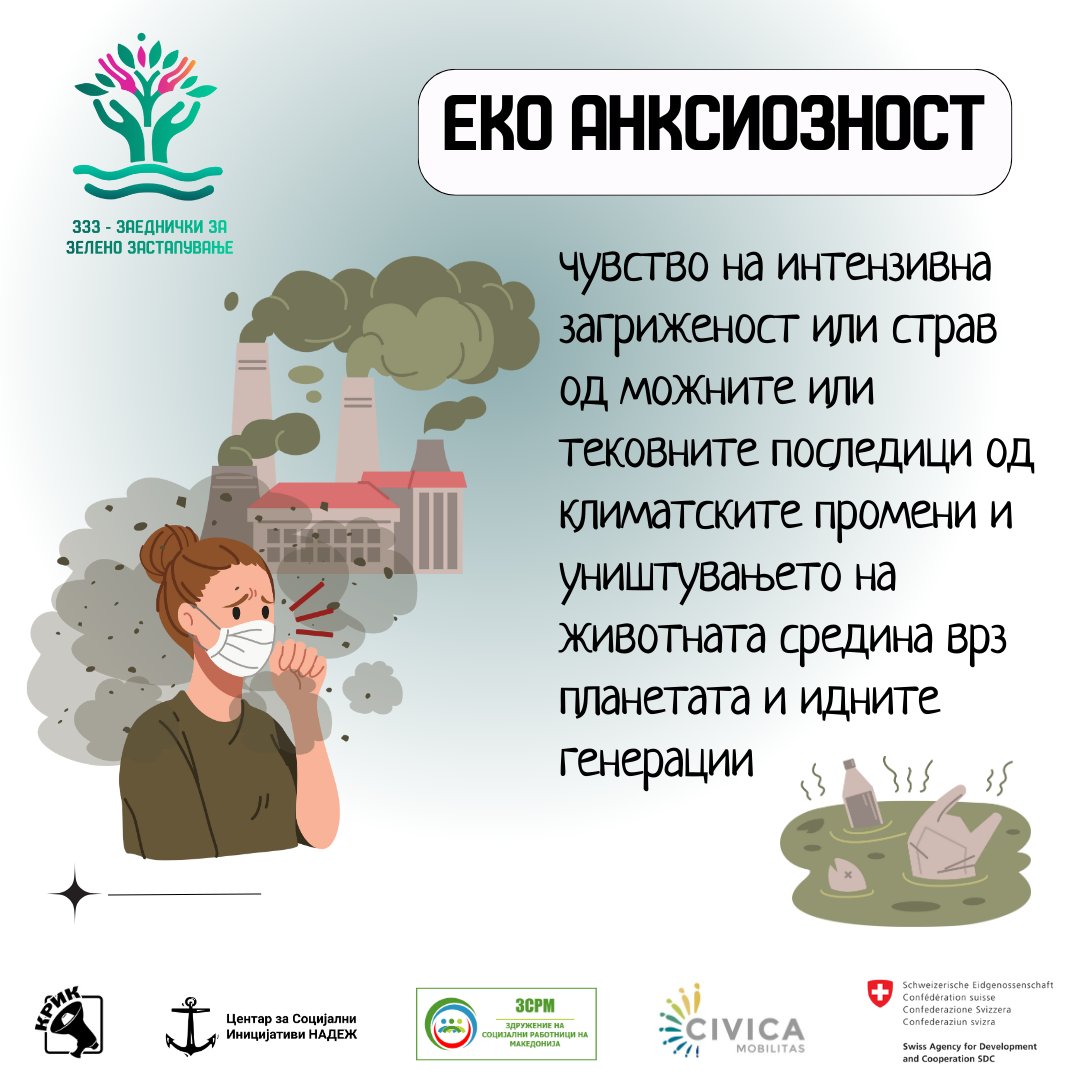
Eco anxiety – anxiety and unease caused by expectations of future climate and environmental disasters;
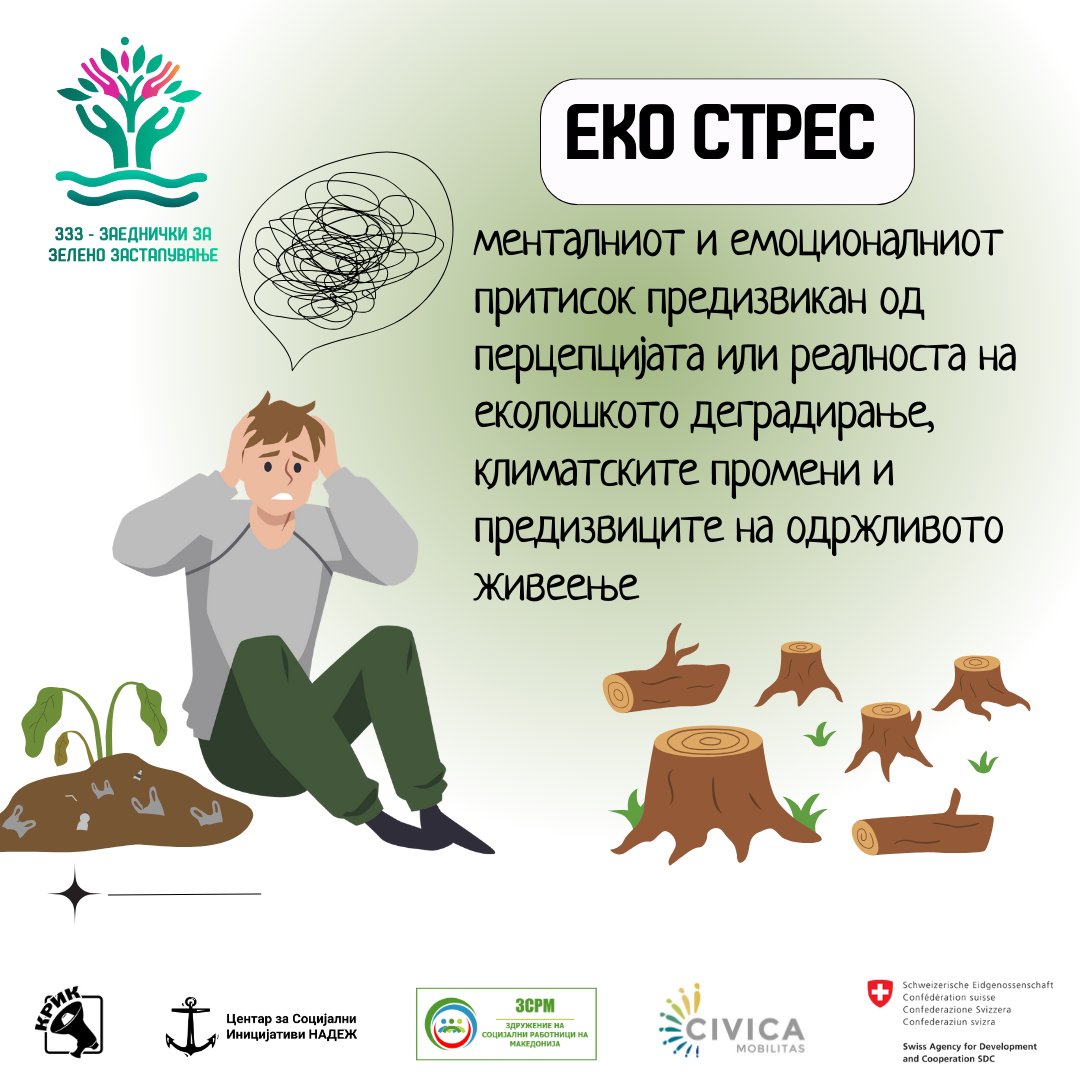
Eco stress – psychophysical reactions experienced by individuals exposed to ongoing environmental problems;
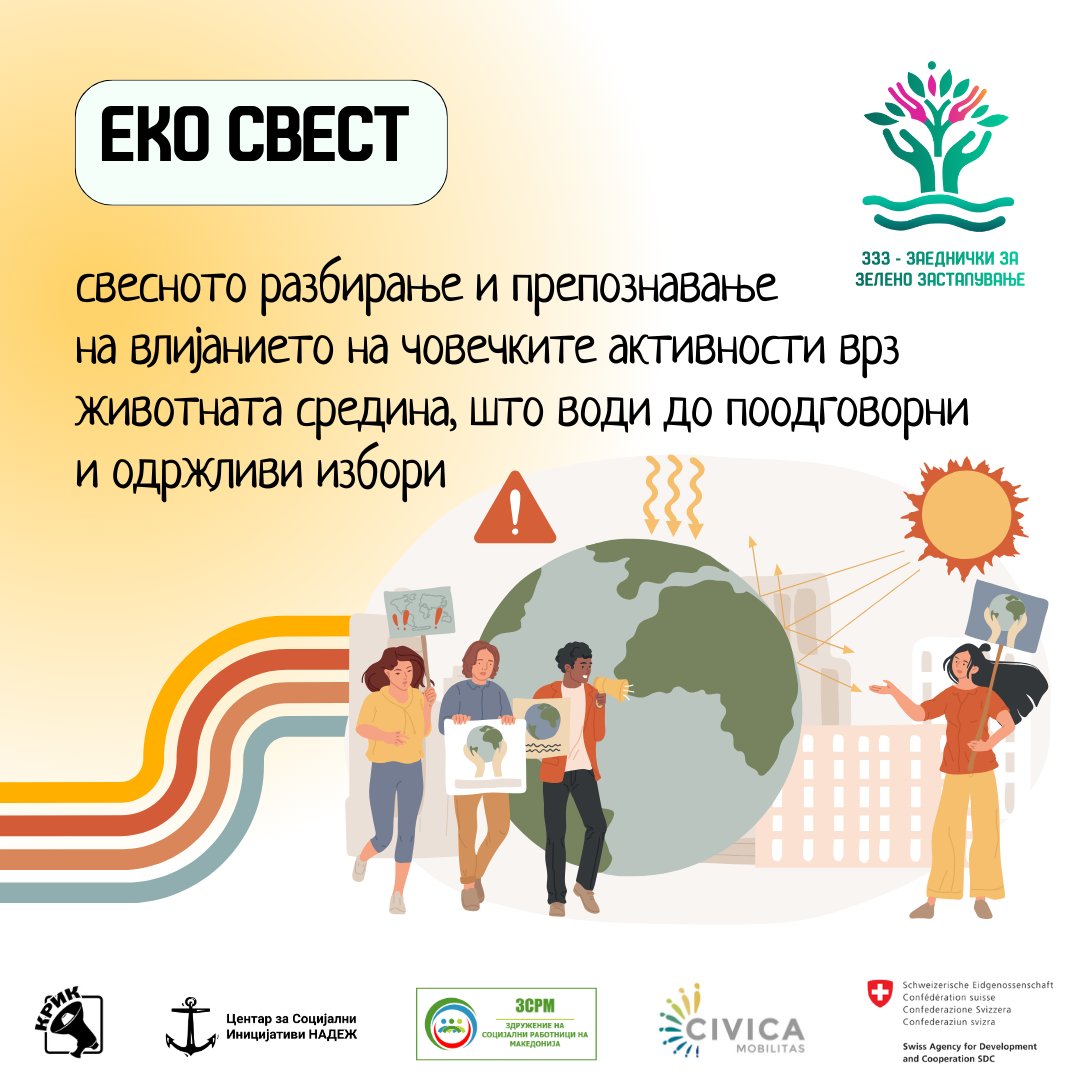
Eco awareness – the ability to recognize and understand the impact that people have on ecosystems and vice versa.
By sharing these terms, the campaign encouraged reflection, dialogue, and critical understanding of environmental issues within social and youth work. Informing and strengthening the capacities of professionals through language that reflects reality is a step toward systemic change and the creation of fairer and more resilient communities.
These terms do not serve merely a descriptive function – they are tools for action, analysis, and advocacy. Through them, we name the challenges and formulate the solutions. The language we use shapes the world we build. That is why we remain committed to sharing the knowledge that drives change.