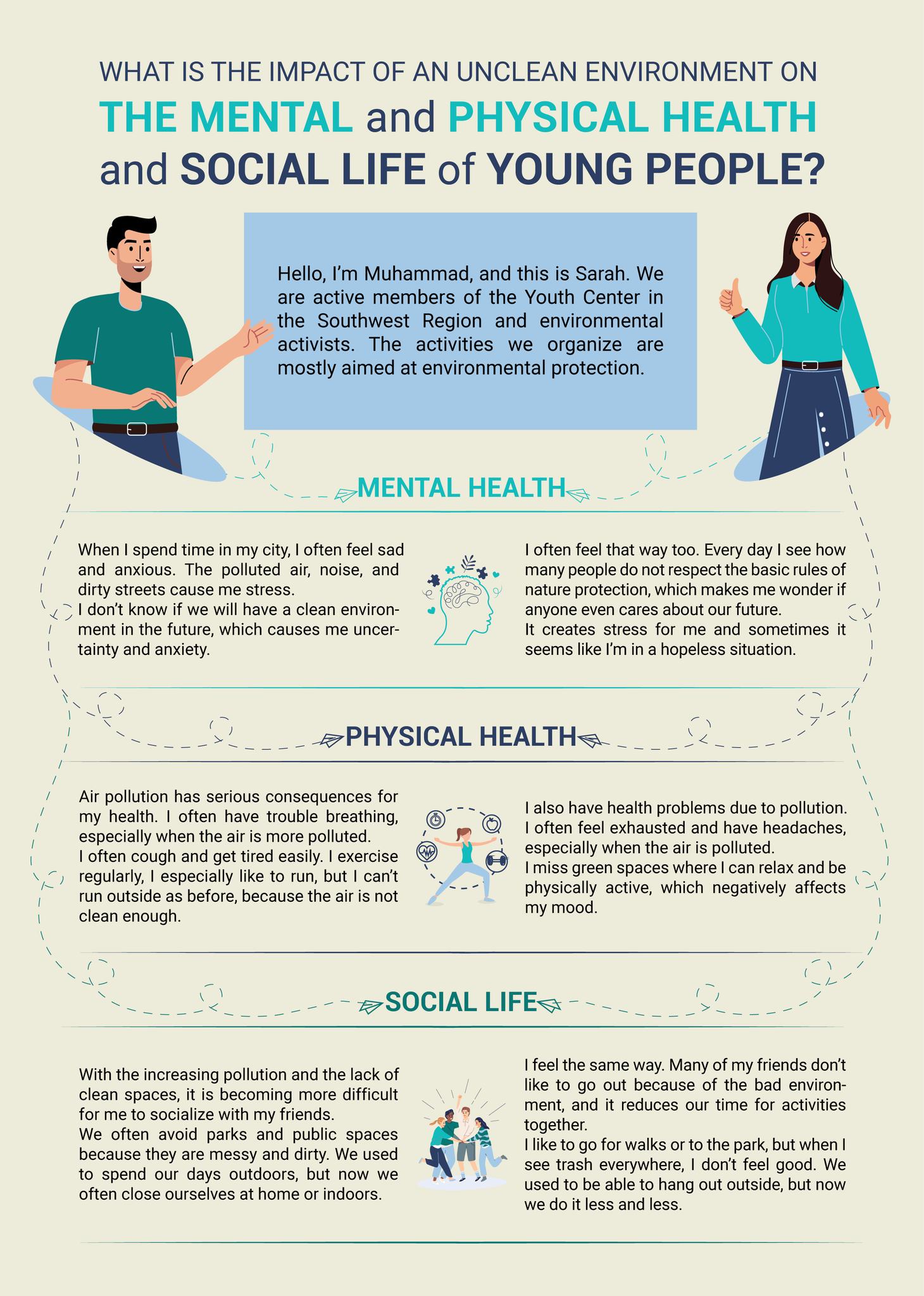
An unclean environment is not only an environmental issue—it directly shapes the way young people live, feel, and connect with one another. This case study focuses on the experiences of two young activists from the Southwest Region, active members of a youth center and long-standing supporters of environmental initiatives.
Through their testimonies, the study illustrates how polluted air, noise, the lack of green spaces, and neglected public areas affect mental health. Feelings of sadness, distress, insecurity, and anxiety become part of everyday life, especially when young people begin to lose faith that conditions can improve and that someone truly cares about the shared future.
The physical consequences are also significant. Fatigue, headaches, breathing difficulties, and reduced opportunities for physical activity are common, particularly during periods of increased pollution. The lack of clean and safe green spaces further limits movement, recreation, and care for one’s own health.
A polluted and neglected environment also strongly affects the social lives of young people. Reduced socializing, avoidance of parks and public spaces, and more frequent withdrawal into indoor environments are just some of the changes young people notice in their daily lives. Spaces that were once places of meeting and connection increasingly become sources of discomfort and aversion.
The case study does not stop at describing the problems—it also points to possible directions for action. Supporting and promoting recycling, organizing clean-up actions and awareness-raising activities, linking environmental topics with mental health, and actively cooperating with local authorities are identified as key steps toward a better environment and a higher quality of life for young people.
The message is clear: environmental care, mental health, and social well-being are inseparably connected. Only through joint, organized, and continuous action can young people create communities in which they feel safe, healthy, and connected.
📘 Read the full case study here.
ℹ️ This case study was developed within the project “ZZZ – Together for Green Advocacy for Environmental Protection”, funded by the Government of Switzerland through the Civica Mobilitas program, and implemented by the Center for Youth Activism KRIK, Center for Social Initiatives “Nadez”, and the Association of Social Workers of Macedonia – ZSRM.
The views expressed in this publication are the sole responsibility of the authors and do not necessarily reflect the views of the Government of Switzerland, Civica Mobilitas, or the organizations implementing the program.